
|
|
United Kingdom
English
United States
English
Botswana
English
Brazil
Português
Canada
English
Canada
Français
Chile
Español
China
繁體中文
Costa Rica
Español
El Salvador
Español
Guatemala
Español
Honduras
Español
Hong Kong
English
Hong Kong
繁體中文
India
English
Kenya
English
Malawi
English
Mexico
Español
Namibia
English
Nicaragua
Español
Philippines
English
Rwanda
English
South Africa
English
Tanzania
English
Trinidad and Tobago
English
Uganda
English
Zambia
English
Zimbabwe
English
How Document Verification and Facial Biometrics Empower Organisations to Verify Identities With Confidence

Fraud now accounts for 45% of all crime in England and Wales, with 4.15 million incidents recorded in the last year.1 As fraudsters adopt AI to generate false documents, deepfakes, cloned voices and synthetic identities, traditional checks simply can’t keep up. In today’s digital-first world, the scale and sophistication of fraud continues to grow, impacting every industry and every part of the consumer journey.
From account creation to login, to transactions and ongoing account management, fraudsters are constantly probing for vulnerabilities. They use advanced technology, stolen credentials and synthetic identities to slip past traditional defences and cause significant financial and reputational damage.
The scale of identity-related fraud in the UK continues to rise sharply. Research suggests that up to 5 million UK consumers may actually be synthetic identity fraud creations2, fabricated personas designed to bypass traditional controls. In just the first half of 2025, organisations recorded 118,000 cases of identity fraud3 and a further 38,000 incidents of account takeover4, showing how relentlessly fraudsters target both the onboarding stage and existing customer accounts.
Identity Is the Foundation of Trust in a Digital World
Every digital interaction begins with identity.
"For legitimate consumers, identity verification is a gateway to trust, enabling access to services, purchases, and accounts. For fraudsters, identity is a powerful tool for deception. They manipulate personal data, steal credentials or fabricate entire personas to impersonate real users and avoid detection." Sally Henstock - Product Manager and lead for digital identity fraud solutions - TransUnion
“Traditional Know Your Customer (KYC) checks, while essential, are no longer enough. Fraudsters now use AI-driven techniques to create highly convincing synthetic identities and alter documents in ways that easily bypass legacy systems.” James Crawshaw - Technical ID & Fraud Solutions Consultant - TransUnion
To stay ahead, organisations need a verification approach that goes deeper, checks more intelligently, and resists manipulation.
Fraud Types Impacting Organisations Across the UK
Although each industry experiences fraud in different ways, most attacks fall into a set of broad categories such as:
Identity fraud: Using stolen, borrowed or synthetic information to impersonate someone.
Account takeover: Gaining unauthorised access to a legitimate account by compromising credentials.
Document fraud: Manipulating or fabricating identity documents to appear genuine.
Biometric fraud: Using deepfakes, masks or injected imagery to bypass biometric checks.
Authentication fraud: Misusing stolen credentials to breach security measures.
Age-related fraud: Misrepresenting age to access restricted products or services.
Large-scale automated attacks: Bot-driven attempts to create accounts, exploit promotions or overwhelm systems.
Strengthening the Journey With Document Verification and Facial Biometrics
Integrating Document Verification and Facial Biometrics into your identity verification workflow adds a powerful layer of protection within a multilayered fraud defence strategy.
These technologies provide strong, credible trust signals that help businesses distinguish genuine customers from sophisticated fraud attempts, without adding unnecessary friction for legitimate users.
Read more about how to strengthen your journey with Document Verification and Facial Biometrics in our eBook: Verifying Digital Identities - Optimising Business Performance and Mitigating Fraud Risks.
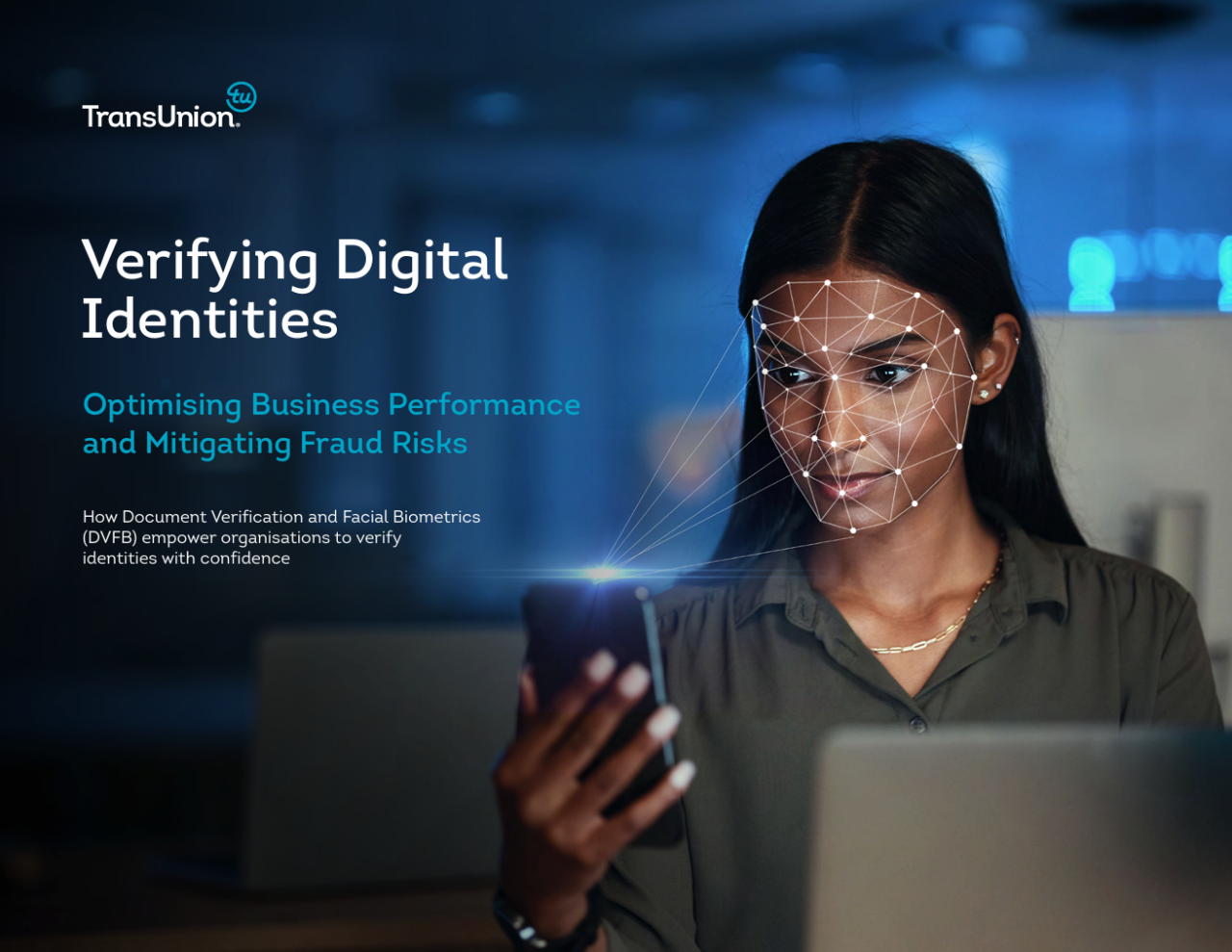
Strengthening the Journey With Document Verification and Facial Biometrics




Contact Us
We're sorry, your request failed. Please try again in a little while.

Information for Good®.
Connect with us
