
|
|
United Kingdom
English
United States
English
Botswana
English
Brazil
Português
Canada
English
Canada
Français
Chile
Español
China
繁體中文
Costa Rica
Español
El Salvador
Español
Guatemala
Español
Honduras
Español
Hong Kong
English
Hong Kong
繁體中文
India
English
Kenya
English
Malawi
English
Mexico
Español
Namibia
English
Nicaragua
Español
Philippines
English
Rwanda
English
South Africa
English
Tanzania
English
Trinidad and Tobago
English
Uganda
English
Zambia
English
Zimbabwe
English
Attack vs. Defence: Why onboarding becomes the weakest point during high-traffic sporting events - and how fraudsters exploit it.

Every major sporting event drives a sudden surge in activity.
For businesses, activity brings opportunity, but it also exposes a critical weakness: onboarding.
When account creation spikes, so does fraud.
The attack: the single riskiest stage in the customer lifecycle
For fraudsters, increased demand means one thing: vulnerability.
With each new account, login attempt and forgotten password reset, an entry point opens.
Recent data from the 2026 TransUnion® Global Fraud Trends Report shows 8.3% of digital account creation attempts were suspected to be fraudulent,1 making onboarding the single riskiest stage in the entire customer lifecycle.
At the same time, the problem doesn’t stop once a customer is through the door.
Account takeover fraud has risen by 37% year on year,1 reflecting how attackers are just as focused on existing accounts as they are on new ones.
This is the modern fraud playbook:
- Create fake accounts at scale
- Slip through weak onboarding checks
- Blend into genuine user bases
- Strike later through account takeover or transaction fraud
And they’re not doing it manually. They’re using automation and synthetic identities crafted from fragments of real and fabricated data.
Why the old defence no longer holds
For years, businesses have relied on familiar tactics:
- Passwords
- Static identity checks
- Basic verification based on fixed data points
The problem is fraud has evolved.
TransUnion research found AI-related fraud to be the leading emerging threat identified by customers. 2 Fraudsters are now using deepfakes, spoofing techniques and manipulated identity data to bypass traditional systems.3
Outdared systems treat identity as a snapshot. Fraudsters treat it as something fluid that they can build, adapt and disguise.
The defence: turning identity into a living signal
To stay in the game, businesses need to change how they think about identity itself. Not as something verified once, but something continuously understood.
A modern defence looks less like a single checkpoint, and more like a coordinated back line.
At onboarding:
- Document verification and biometric checks establish trust early
- Device intelligence flags suspicious patterns from the outset
At login:
- Behavioural signals reveal whether a user is acting normally
- Risk-based authentication adds friction only when needed
Across the lifecycle:
- Identity data is connected, enriched and continuously evaluated
This layered approach matters because fraud doesn’t happen in isolation - it moves.
And if your systems don’t move with it, attackers will find the gaps.
The balancing act: defence vs. experience
Tackling fraud is a balancing act. Push security too far and you create friction that drives customers away. Ease the journey too much and you open the door to fraud.
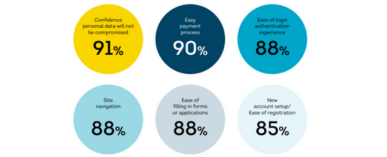
And today’s consumers are clear about what matters most; 77% say confidence in how their data is protected is a key factor when choosing who to transact with online..3
Trust has become part of the product.
Final whistle: winning where it matters most
During this summer of sport, businesses aren’t just competing for customers — they’re competing for trust in an environment where fraudsters are faster, smarter and more coordinated than ever.
Organisations that succeed won’t just defend against fraud; they’ll anticipate it, adapt to it and design for it. The strongest defence isn’t a single tactic - it’s a multilayered defence that evolves just as quickly as the attack.
Find out how to build a robust, adaptive defence against fraud in our guide: A Multilayered Approach to Help Combat Digital Fraud.
1 TransUnion Global Fraud Trends H1 2026
2 TransUnion internal VoC customer feedback May 2026
3 TransUnion. 2026. A Multilayered Approach to Combat Digital Fraud




Contact Us
We're sorry, your request failed. Please try again in a little while.

Information for Good®.
Connect with us
